

Evolution of Marketing in The Digital Age
Previously, probably a few years back, marketing through advertisement was all about television jingles, hoardings on a busy street or half-page newspaper ads. Today, marketing through these media still exists, but the same influence can be achieved through a 30-second Instagram reel, a YouTube video or a more targeted WhatsApp campaign.
This shift is a clear indication of how brands and consumers connect. Marketing today has evolved from just promotional activities to a more multifaceted strategy that involves personalisation and technological innovation. Why?
Rather than solely selling products through one-way communication, the focus is on more engagement and building long-term relationships that ultimately lead to brand loyalty.
Shift From Traditional to Digital Advertising
If you look at the earlier brands like Amul, Cadbury, KitKat and others, they greatly relied on TV commercials, newspaper and outdoor advertisements.
However, the mindset of the people has greatly changed with the popularity of digital platforms, due to which the audience has shifted towards mobile screens and billboards.
Nowadays, we are seeing a significant shift in social media marketing. So, what’s the reason behind it?
It is seen that though traditional marketing strategies were effective and still relevant, they lacked a two-way interaction between the brand and the target audience.
Social media directly allows brands to connect with their audience. They can comment on a brand’s Instagram post, review a product on Amazon, or directly message a company on Twitter. This kind of interaction has made marketing more conversational and consumer-centric.
On the other hand, brands can track engagement rates, monitor feedback and adjust their strategies accordingly. This real-time communication helps in building a stronger connection with the audience and improving the overall marketing approach.
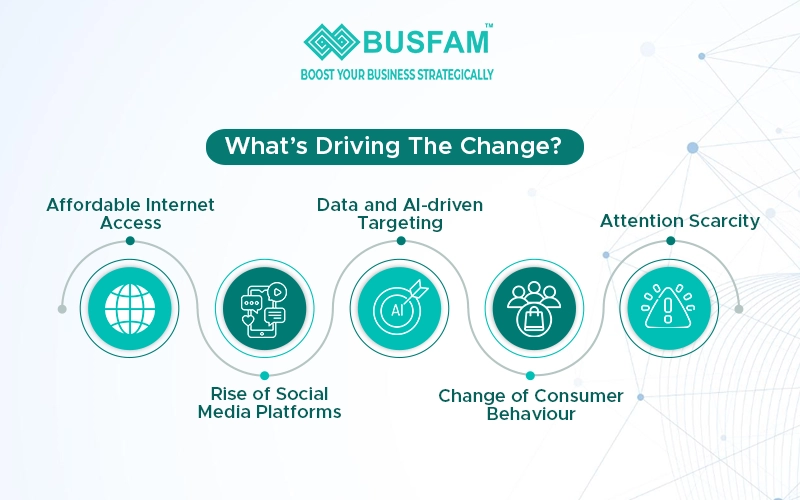
What’s Driving the Change?
The increased inclination towards digital marketing is driven by a mix of technological and behavioural factors.
Affordable Internet Access: This is perhaps the biggest trigger that everyone has access to cheap and widespread Internet access. The availability of low-cost Internet plans has massively increased the audience for digital marketing.
Rise of Social Media Platforms: Platforms like Facebook, Instagram and YouTube have transformed the way audiences consume content. Today, users like to engage, interact and share content, thereby forcing brands to become more interactive.
Data and AI-Driven Targeting: Brands no longer rely on guesswork and a one-message-for-everyone approach. With the help of AI tools, brands can analyse user data such as search history, clicks, location and purchase behaviour to come up with more personalised ads.
Change of Consumer Behaviour: Present-day consumers, especially the younger generation, do not trust traditional advertisement that much before buying. Instead, they trust online ratings, reviews and influencers to make a purchase.
Attention Scarcity: The attention span has reduced to a great extent. This has pushed innovation in advertising formats, including reels, shorts and interactive campaigns.
Conclusion
Successful marketing in the digital age is not about shouting the loudest. It is about listening, engaging and building trust. In the next few years, it is predicted that marketing will continue to evolve and become more technology-driven and personalised.
As a leading digital marketing and branding agency, BUSFAM combines strategy, creativity, and data-driven insights to deliver impactful solutions that help brands create lasting connections with the audience.